18 vs 24 Inch Garage Cabinets: Which Depth Do You Need?
Quick answer: For most Treasure Valley garages, 18 inch deep cabinets are the better default. They hold common storage totes, tools and household supplies while leaving more room to park and walk around your car. Choose 24 inch deep cabinets for the spots where you store bulky items, wide totes or large equipment, and where you have the floor space to spare. Many homeowners end up with a mix: standard depth along the parking side and a deeper cabinet or two where space allows.
Cabinet depth is one of the easiest details to overlook when you plan garage storage, and one of the hardest to change later. A few inches can decide whether you open your car door comfortably or squeeze past a cabinet every morning. This guide walks through how to choose between 18 and 24 inch deep garage cabinets, how to measure your own garage, and how Buildout Cabinets handles depth in its packages.
What "Cabinet Depth" Means in a Garage
Depth is the distance a cabinet sticks out from the wall. In a kitchen, that number is mostly about countertop space. In a garage, it is about the space left over for everything else: your vehicles, the walkway to the door, the trash cans, the bikes and the lawn mower.
Width and height matter too, but depth is the measurement that competes directly with your parking space. That is why it deserves its own decision instead of being an afterthought.
18 Inch Deep Garage Cabinets: The Practical Default
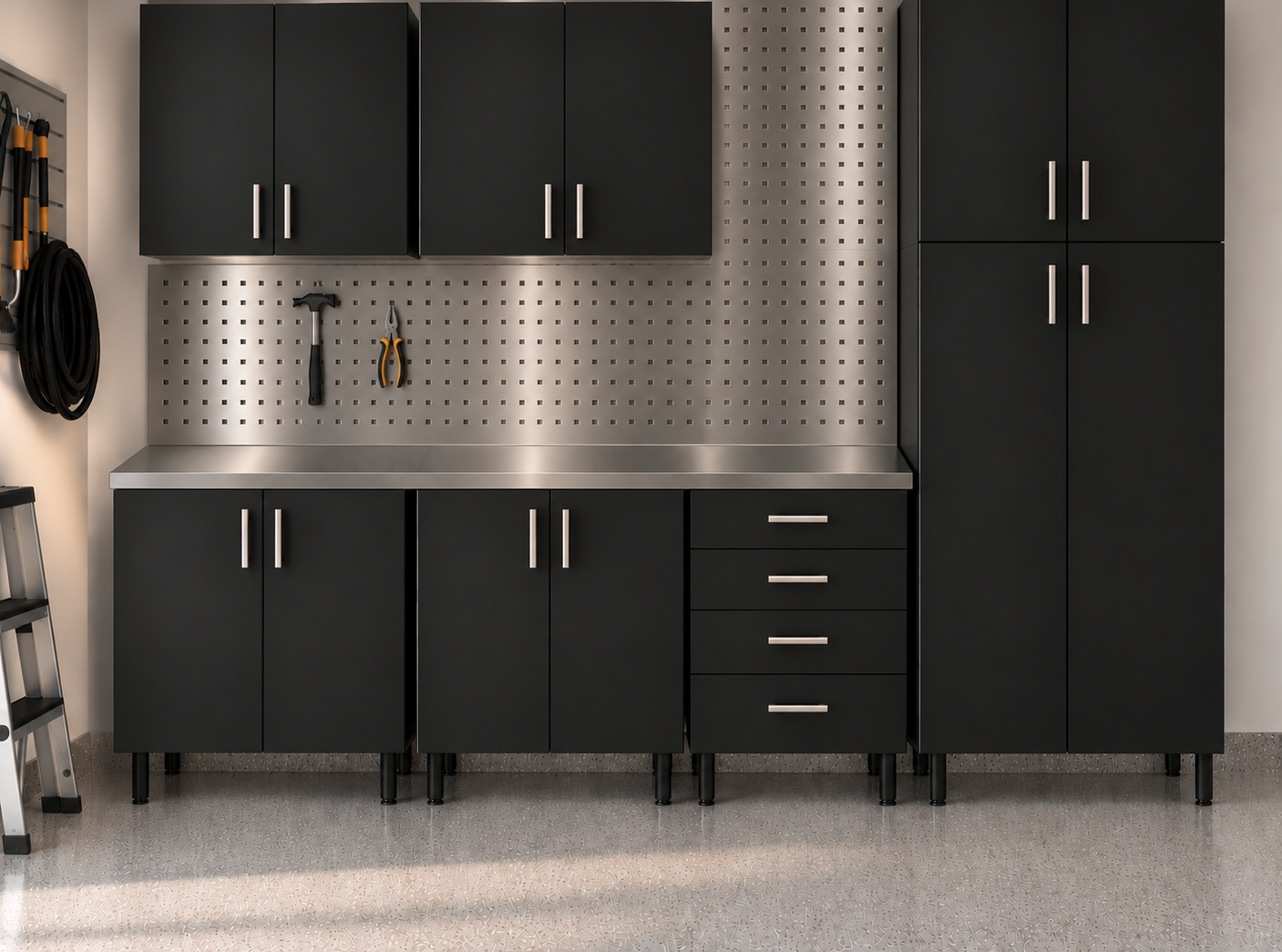
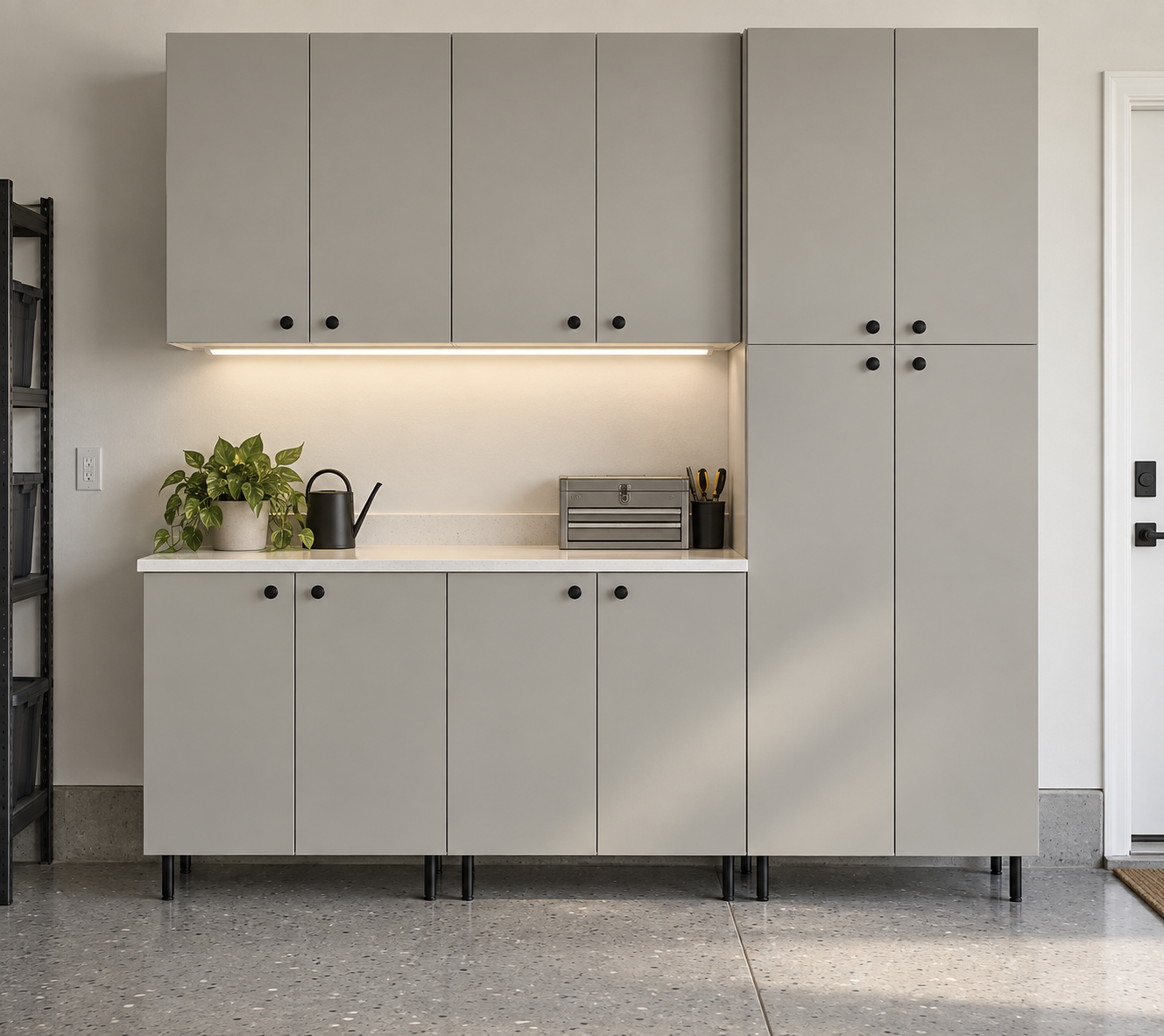
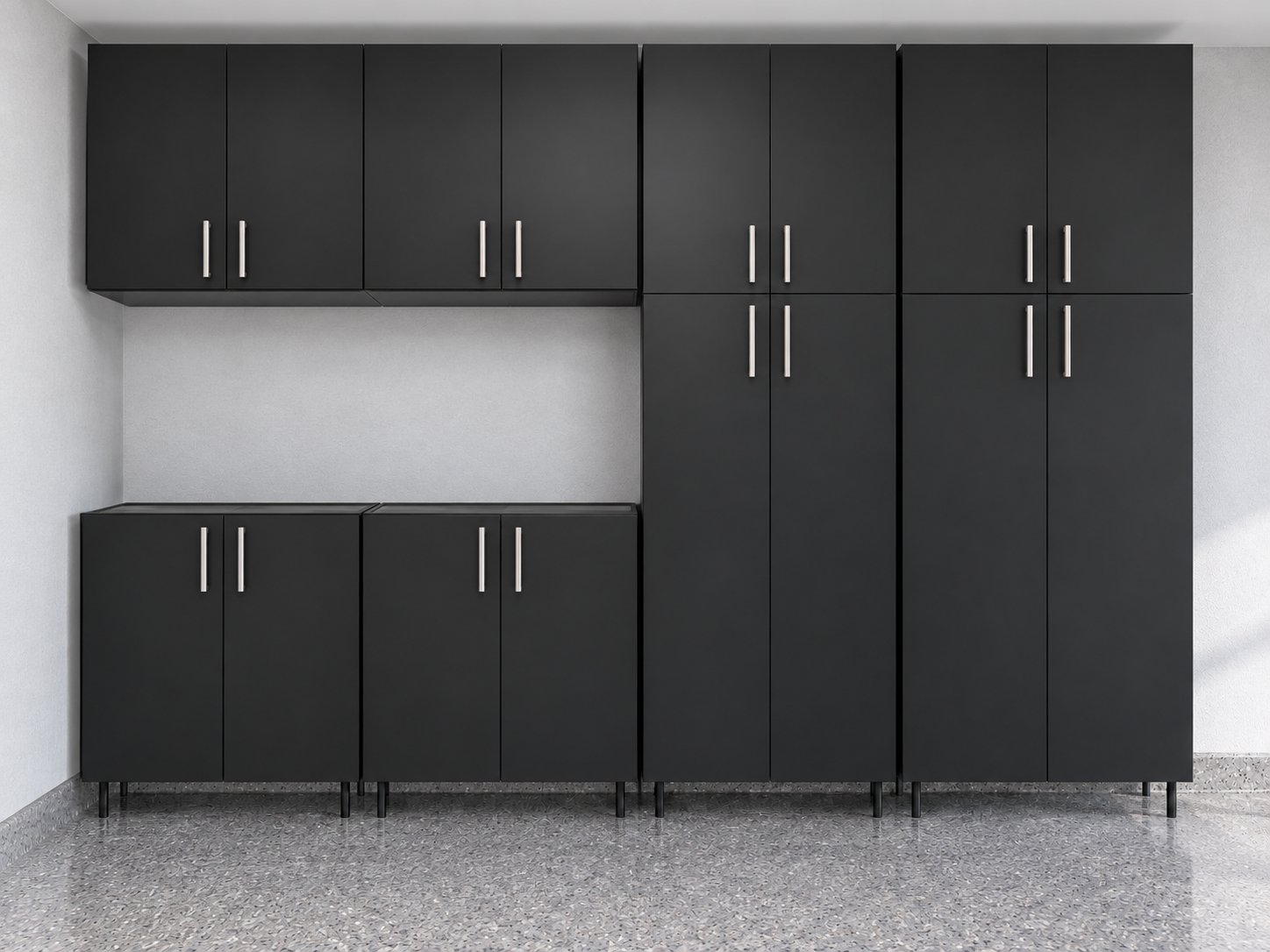
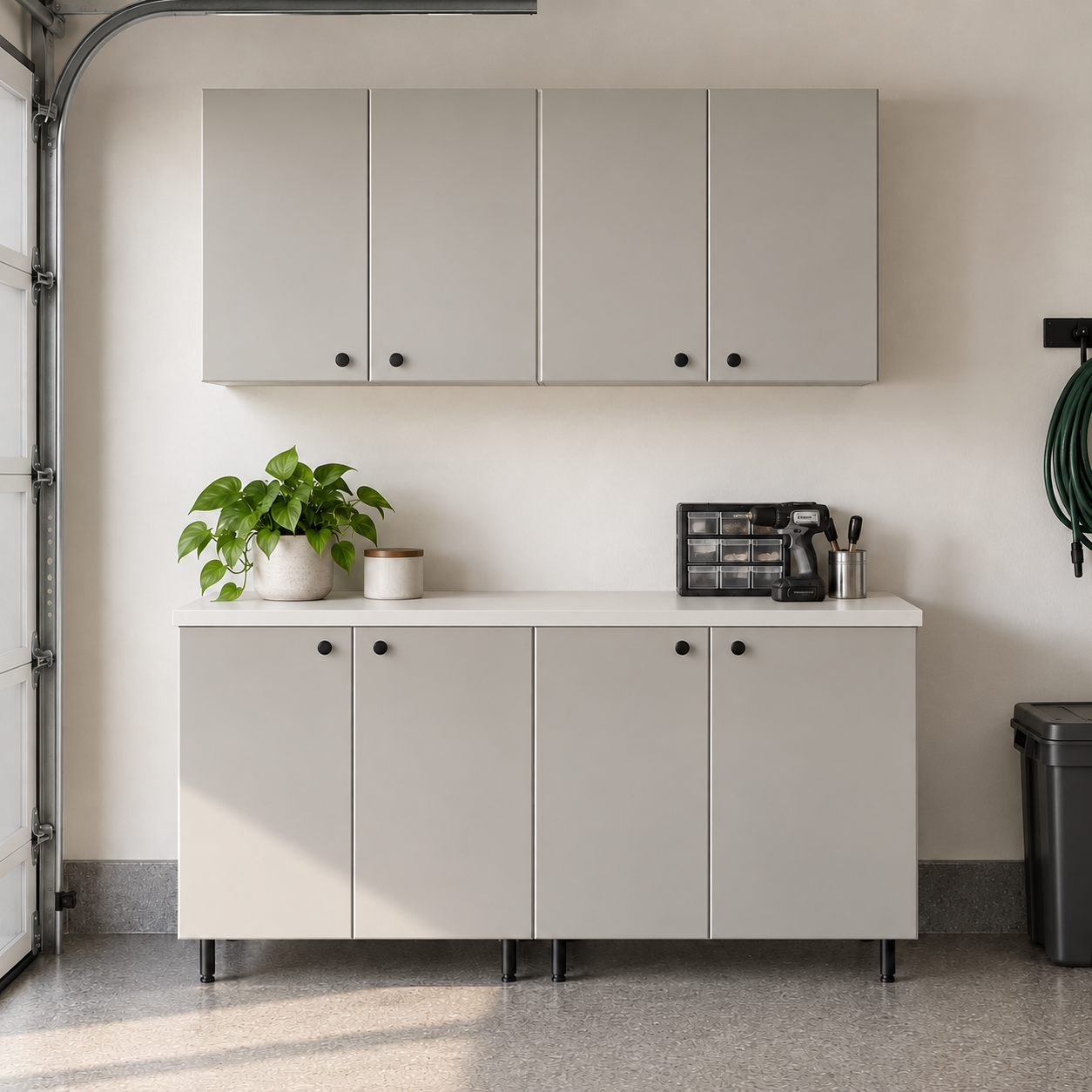
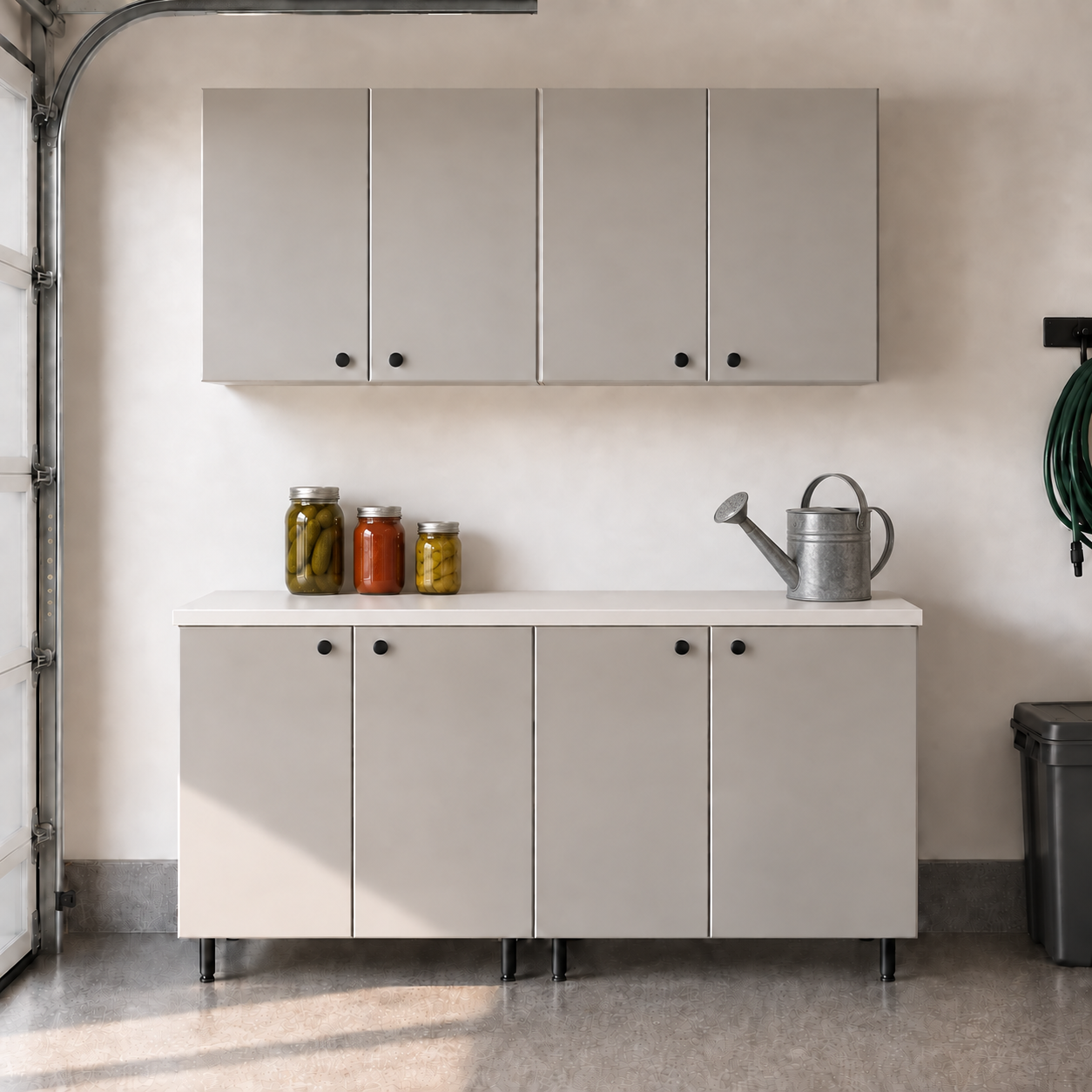
Buildout's standard package cabinets are listed at 30 inches wide by 18 inches deep. Upper cabinets are 32 inches tall, lower cabinets are 34 1/2 inches tall, and tall cabinets are 96 inches tall.
Where 18 inch cabinets work best
- Along the wall beside a parked car. A shallower cabinet leaves more room to open doors and unload kids, groceries or gear.
- Near the entry door or walkway. You keep a clear path from the car to the house.
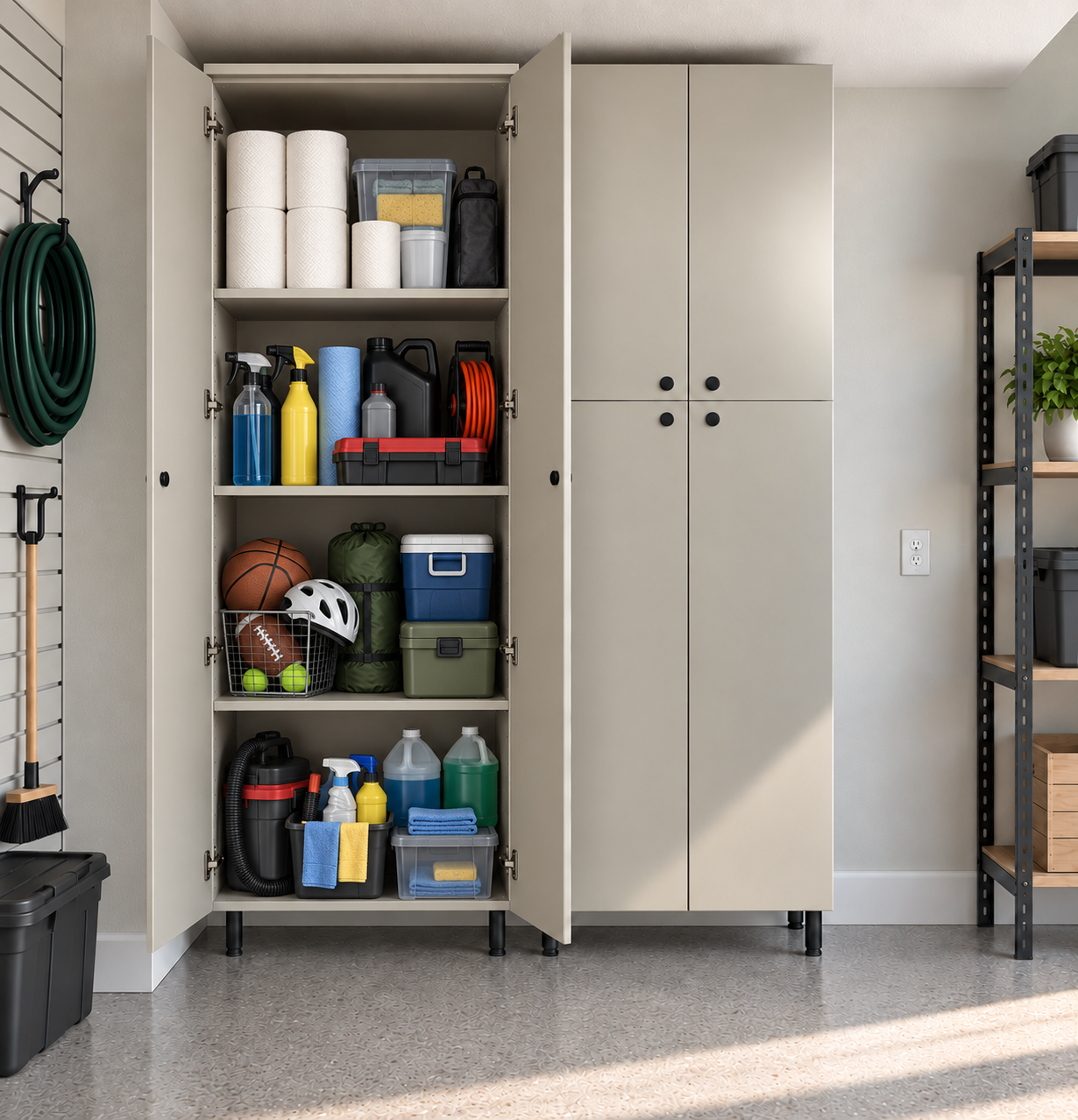
- For everyday items. Cleaning supplies, paint, automotive fluids, hand tools, sports gear and many common storage totes fit comfortably.
- Upper cabinets. Shallower uppers are easier to reach into and less likely to be in the way when you work below them.
The tradeoffs
An 18 inch cabinet is not the right home for everything. Very large totes, coolers, bulky camping gear or wide power tools may not fit, or may fit only one row deep. If most of what you want to store is oversized, a deeper cabinet in the right location can save frustration.
24 Inch Deep Garage Cabinets: Extra Room for Bulky Storage
Buildout offers a 36 inch by 24 inch Large Storage Upgrade. It enlarges an eligible cabinet to 36 inches wide and 24 inches deep, and it is listed at an additional $200 per eligible cabinet. It is designed for bulky items and large totes.
Where 24 inch cabinets make sense
- The back wall of a deep garage. If you have extra length in front of your bumper, a deeper cabinet often fits without crowding the car.
- A third bay, shop space or RV bay. Spaces that are not used for daily parking can usually give up more floor depth.
- Holiday decorations and camping gear. Large, awkward items are easier to store behind doors when the cabinet is deeper.
- Wide totes. If your totes are longer than a standard cabinet is deep, a deeper cabinet may let them slide in the long way.
The tradeoffs
Deeper cabinets take up more floor space, and items at the very back can be harder to see and reach. If you choose 24 inch cabinets, plan to keep frequently used items toward the front and use the back for seasonal storage.
How to Measure Your Garage for Cabinet Depth
You do not need exact measurements to start an estimate, but a few quick checks will help you decide which depth fits where.
- Park your car where you normally park it. Do this before you measure, since that is how the garage will be used every day.
- Measure from the wall to the nearest point of the car. On a side wall, measure to the widest point of the car with the doors closed. On the back wall, measure to the front or rear bumper.
- Open the doors. Check how far the car doors swing toward the wall and whether you can still get in and out comfortably.
- Leave room to walk. Think about the path you take carrying groceries, a car seat or a trash can.
- Note obstacles. Outlets, electrical panels, water heaters, windows, doors and garage door tracks can all affect where cabinets go and how deep they can be.
- Measure your biggest totes. Measure the longest side of the totes or bins you plan to store so you know whether standard or deeper cabinets fit them better.
Buildout verifies garage measurements before production and checks for tracks, outlets, panels, windows, doors, water heaters and other obstacles, so your rough numbers are a starting point, not a final commitment.
Mixing Depths: Often the Best of Both
You do not have to choose one depth for the entire garage. A common approach is to keep standard 18 inch cabinets where you park and walk, and use one or two 24 inch deep cabinets in a corner or along a back wall where you have extra room.
For example, a homeowner in a two-car garage might run standard upper and lower cabinets along the side wall next to the car, then place a larger cabinet near the back corner for holiday bins. A hobbyist with a shop bay might go deeper along that whole wall, since no car parks there.
Tall cabinets are worth considering in this plan, too. Buildout's tall cabinets are 96 inches tall, so they add a lot of vertical storage without taking more floor depth than a standard cabinet.
Upper Cabinets, Lower Cabinets and Depth
Depth affects uppers and lowers differently. Lower cabinets sit at bumper and door height, so they are the ones most likely to interfere with parking. Upper cabinets hang above that zone, which gives you a little more flexibility, but they should still be easy to reach into without a ladder for the items you use most.
If you plan to use a work surface on top of lower cabinets, think about how much depth you want for working. A workbench area often benefits from more surface space, while storage-only walls can stay shallower.
Questions to Ask Before You Choose
- Will a car park next to this wall every day?
- What are the biggest items I want behind closed doors?
- Do I need a clear walkway on this side of the garage?
- Is there an outlet, panel or water heater that limits this wall?
- Would a tall cabinet give me the storage I need without going deeper?
Frequently Asked Questions
Will large storage totes fit in standard garage cabinets?
Many common totes fit Buildout's standard and upgraded cabinets. Because tote sizes vary by brand, it is best to confirm your specific totes with Buildout when you request an estimate.
Can I upgrade only one or two cabinets to 24 inches deep?
Yes. The Large Storage Upgrade applies per eligible cabinet, so you can make only the cabinets that need extra room deeper.
What are the cabinets made of?
Buildout cabinets are frameless, European-style cabinets with 5/8 inch melamine carcasses and 3/4 inch doors and shelves. Shelves are adjustable, and finishes come in white, gray and black.
Related Reading
If you are still in the planning stage, these guides may help:
Next Step: Get an Online Estimate
Buildout Cabinets serves homeowners across the Treasure Valley, including Nampa, Caldwell, Boise, Meridian, Eagle and Star. If you are deciding between standard and deeper cabinets, the easiest next step is to start with the online estimator. Choose a package, add a Large Storage Upgrade where you think you need it, and tell us what you plan to store. A Buildout representative will follow up to confirm measurements and help you settle on the right layout.